Paving Over the Sacred
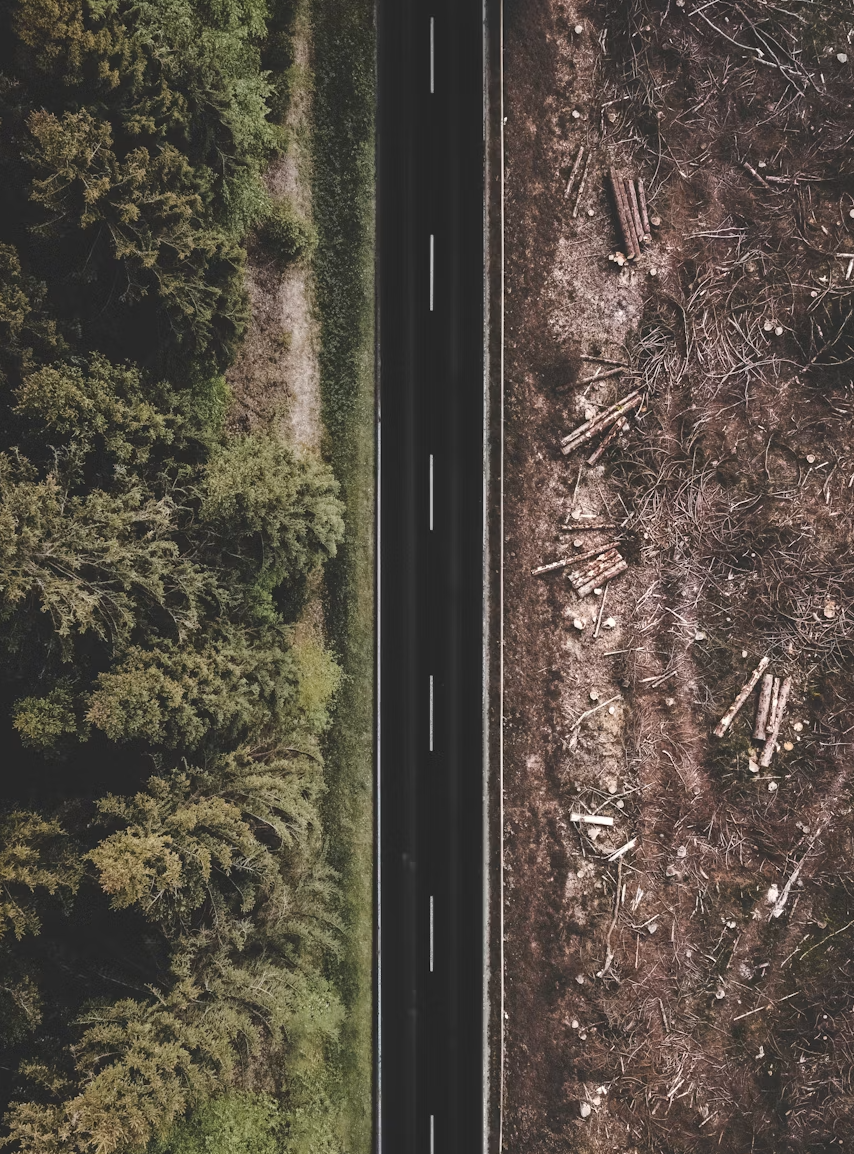
Photo by Justus Menke on Unsplash
I am a freelance editor and have been dealing with AI-contaminated writing for about a year now. I believe that language is an organic aspect of our humanity; in other words, it grows and changes with us. That’s why there are so many languages in the world—groups of people living and speaking with one another give rise to not only different words, but different ways of stringing them together and different ways of using them to convey multitudes of nuanced meanings based on shared experiences. How we use language affects how we see the world, and how we see the world and relate with one another changes how we use language. But now that people are writing with AI, all that variety of individually developed voice and place-based and experience-based organic expression and growth of language is being strangled into one limited, blended up, bland, lifeless voice—the AI voice. Which in turn, if we are reading much of it, influences our own capacity for thought and articulation.
So far this past year, across too many subjects, the manuscripts I’ve been getting sound almost identical: someone writing about surviving cancer sounds the same as someone writing about their devotion to Jesus sounds the same as someone talking about meditation techniques sounds the same as someone telling their story of making it through addiction sounds the same as someone writing about fitness or being a mechanic or being a single parent or surviving political upheaval, and so on and so on. Reading this same voice over and over, I started to notice my own thinking falling into those same limited patterns driven by AI algorithms. It was almost a kind of reprogramming effect, the repetition of phrases, short sentences, rhythms, words, a certain pithy style, light and friendly, familiar, was numbing the language part of my brain, filling it with a sludge of meaninglessness.
This is how we learn language in the first place—babies learn just by exposure to the tones, rhythms, words, phrasings that surround them. Over and over they hear these patterns and absorb them, which gives them the ability to start using them and putting them together in their own ways to describe their own experience and communicate with others. I would bet, though I’m not going to take the time to research it at this moment, that there are studies out there showing that the more complex and nuanced language babies and young children are exposed to, the more complex and nuanced their thought can be. And this process of absorbing language which affects our thought never ends. If you live long enough in a new country surrounded by people who speak another language, eventually you will learn that new language.
If AI-generated writing becomes the language/voice we are all reading and absorbing, I suspect that in general, our thinking and perception will start to shrink and shrivel down to that one, non-experiencing, non-organic mode of putting words in a string of predictable patterns rather than flowing and tumbling along in a beautiful, chaotic outpouring of actual living, responding, transforming thought and communication. There is no doubt that computer-enhanced processes are going to continue to be part of our collective lives and bring us many benefits. But surrendering our use of language over to them seems to me a dangerous and tragic proposition. I support anyone resisting that, and especially folks whose language is being shared and read by good numbers of people. Like a hyper-local news outlet where I live in Vancouver BC, who has committed to their readers never to use AI in their writing. Hooray for those who take a stand.
Some people argue that resisting “innovative” technologies is just a form of “moral panic,” that such moral panics have occurred at every juncture of a new technology, and that the arguments of those sounding the alarm were completely proven wrong by the fact that our species still exists. I don’t buy that argument myself. I think that many previous technological creations (whether physical, mechanical, or philosophical) have caused more damage than good to human well-being in general. I don’t think the idea that human beings should be constantly consuming and producing, amassing surplus, striving for efficiency and profit at the expense of anything else, is actually a valid approach to the highest good for humans (not to mention other creatures and ecosystems).
Every new technological advancement comes with benefits and costs. Take cars and mass transportation as an example. Benefits are numerous, and costs are showing up today as pretty devastating on a large scale. Not all new technologies create the same level of cost, however. I don’t think typewriters or the printing press created anything like the kind of cost we are paying and going to pay for our acquiescence to the use of AI for thinking and writing and other creative activities.
To name the costs of this new technology, and not just the technology itself but its sole purpose (as there is no actual need for it in terms of human flourishing let alone for our survival) as a means of generating more wealth (which means it is not a neutral element in the lives of most people but is, in fact, something designed to capture attention, energy, and full participation so as to be sure that the machinery keeps generating more and more wealth) is a necessary part of developing a conscious relationship to it. To swallow it whole the way it is being shoved down our gullets at this time is to give in to a degradation of the human spirit—as has been the case many times before with other technologies that have proved more costly than beneficial. I do believe there is a sacred inner aspect to life that cannot be duplicated by machinery of any kind, no matter how sophisticated. We’ve been paving over the sacred for hundreds of years now, but that doesn’t mean we should stop pointing it out and struggling against it.
©2026 Clelia Vahni Lewis

Photo by Clelia Vahni Lewis